Fort Collins & Northern Colorado

Metal Roofing in Fort Collins & Northern Colorado

Metal roofing is not a single roof type. Standing seam, exposed-fastener panels, and stone-coated steel differ in appearance, fastening, waterproofing, flashing, maintenance, installation requirements, appropriate applications, and price.

Drennen approaches metal roofing as a complete roof system—not simply a visible panel. We evaluate the roof deck, membrane, attachment, flashing, ventilation, drainage, penetrations, and project-specific details together.

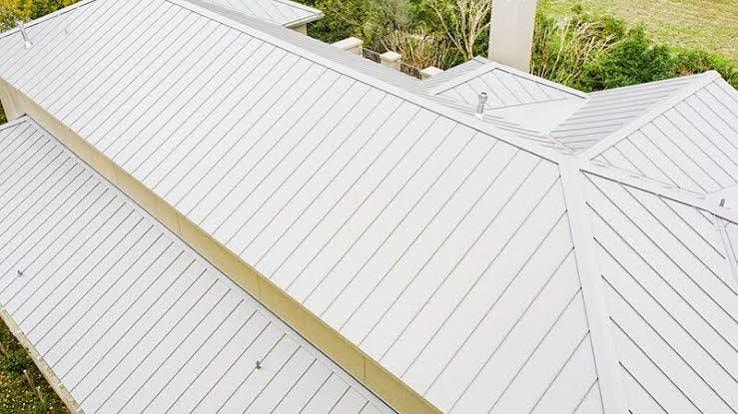
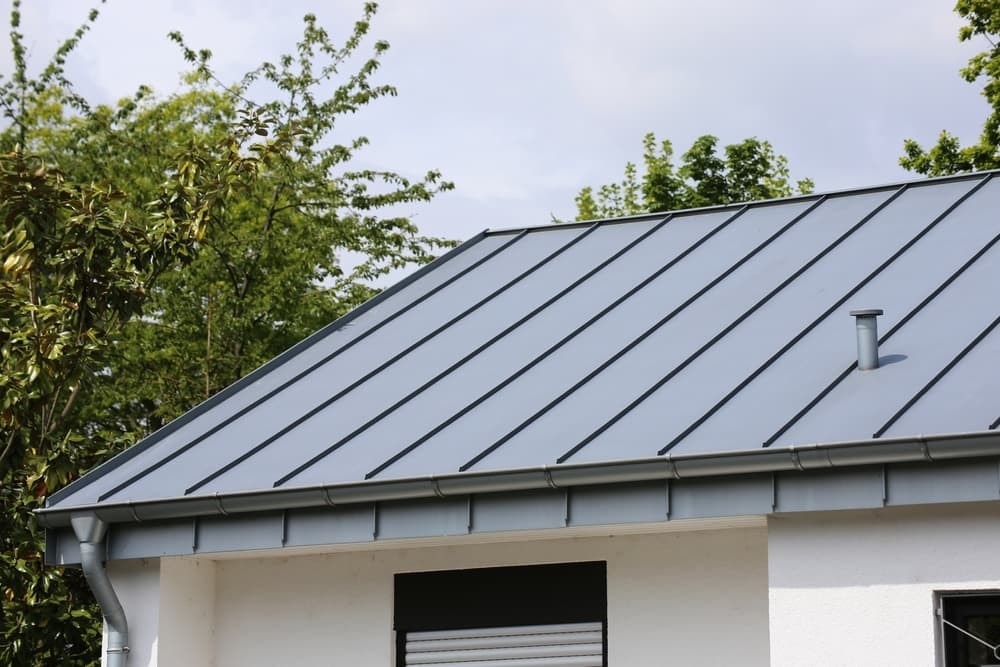
Light gray standing-seam metal roof on a residential building

Types of Metal Roofing

The right metal roof depends on the building, roof geometry, slope, detailing needs, appearance goals, and budget.

Standing Seam Metal Roofing

Standing seam uses raised seams and concealed primary fastening for an architectural appearance. Snap-lock and mechanically seamed systems are different assemblies, and specialty or lower-slope applications require an appropriate tested mechanical system.

Exposed-Fastener Metal Roofing

Ribbed Pro-Panel-style and PBR-style panels use exposed screws and sealing washers. They are generally more economical than premium standing seam and can suit barns, shops, garages, outbuildings, and appropriate residential applications. This is a different roof system—not inexpensive standing seam—with its own maintenance and detailing requirements.

Stone-Coated Steel Roofing

Stone-coated steel uses formed steel panels with a textured stone or granular coating for a shake- or tile-like appearance. Manufacturer-specific fastening, flashing, walking, repair, and accessory requirements matter for the complete system.

Standing Seam Is a System, Not Just a Panel

Two standing-seam proposals can differ substantially even when both say “metal roof.” The complete system may vary by steel gauge, panel width, seam height, snap-lock or mechanically seamed profile, concealed clips, fastener type, clip spacing, substrate, membrane, coatings, panel length, valleys, wall flashing, penetrations, thermal movement, ventilation, and tested assembly requirements.

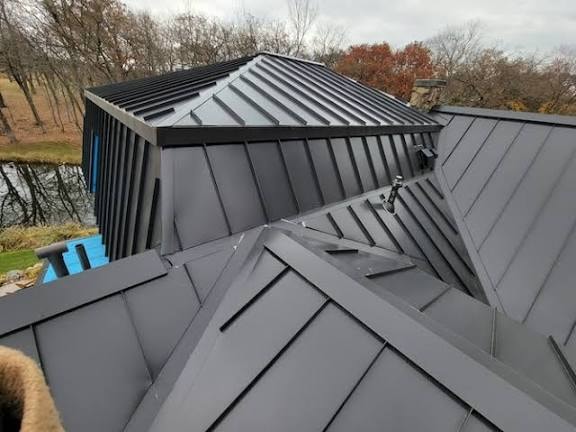
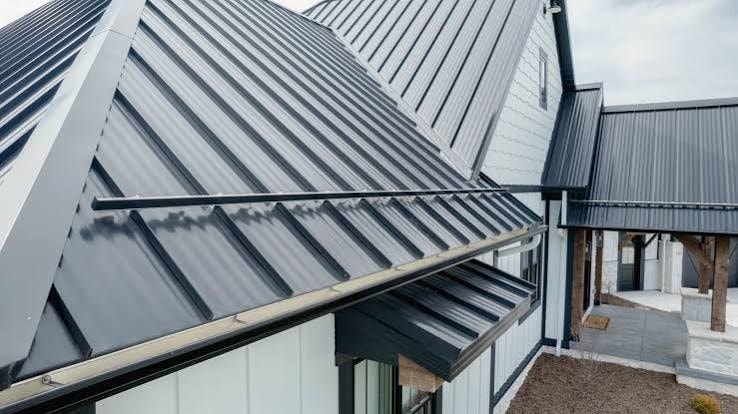
Dark standing-seam metal roof with intersecting planes and custom valley flashing

24 Gauge vs. 26 Gauge

24-gauge steel is thicker and stiffer than 26-gauge steel. Increased stiffness can matter for panel rigidity and cosmetic response. Gauge alone does not establish a hail rating, wind-uplift performance, or warranty; the complete tested assembly—including panels, clips, fasteners, substrate, spacing, and installation details—matters.

Snap-Lock vs. Mechanically Seamed

Snap-lock seams engage during installation. Mechanical seams receive an additional closing or seaming operation. Certain mechanically seamed systems can be appropriate at lower slopes and may provide additional weather-tightness for certain projects. Roof slope and tested system requirements should drive the decision—not simply seam height or price.

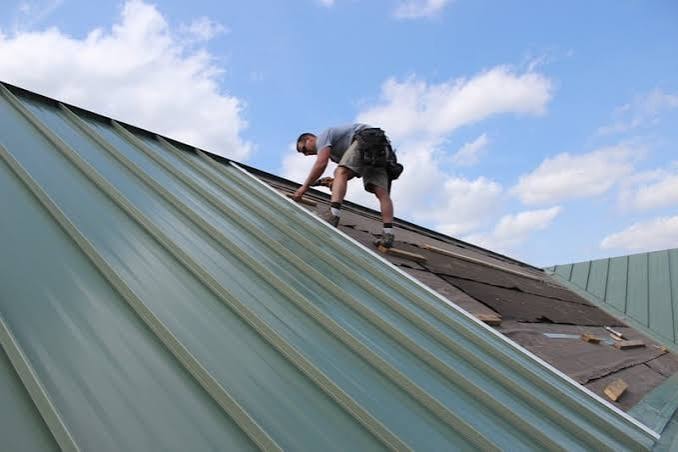
Installer fitting standing-seam metal roofing panels on a sloped roof

What Is Under a Metal Roof?

Comparing only panel price is not comparing complete roofs. A complete-system approach can include:

  • Property protection and tear-off
  • Deck inspection and preparation
  • Metal-compatible high-temperature membrane or underlayment
  • Clips, fasteners, eave and start details
  • Hips, ridges, valleys, sidewall and headwall flashing
  • Roof penetrations, plumbing vents, combustion vents, and exhaust terminations
  • Ventilation, gutter and drainage coordination
  • Snow retention where appropriate
  • Permits, inspections, cleanup, and workmanship inspection

Northern Colorado Conditions

Hail

Metal roofing can be evaluated for functional roof performance and cosmetic denting separately. No metal roof should be described as dent-proof or hail-proof.

Wind

Wind performance depends on the panel system, clips, fasteners, substrate, clip spacing, roof zones, building conditions, and tested assembly.

Snow

Metal sheds snow differently than asphalt shingles. Occupied areas below roof slopes should be evaluated. Standing-seam systems can often use non-penetrating seam-clamped snow retention, designed for the panel and roof.

Wildfire and Ember Exposure

A noncombustible field panel is only one part of wildfire-resilient roofing. Roof edges, ventilation openings, gutters, valleys, siding interfaces, decks, debris, and ember entry points also matter.

Temperature and Thermal Movement

Long metal panels expand and contract, so appropriate attachment and detailing are essential.

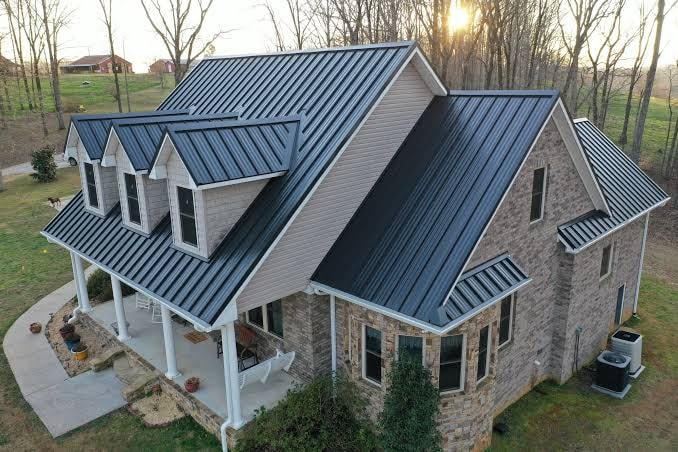
Finished dark standing-seam metal roof on a home with multiple roof planes
Light standing-seam metal roof showing intersecting roof planes and detailed seams

How Much Does Standing-Seam Metal Roofing Cost?

Complete residential standing-seam roofing in Northern Colorado can vary substantially by roof design and system. For preliminary planning, approximately $2,000–$2,500+ per measured roofing square can be a useful starting range for many projects, while straightforward roof geometry may price below that range and highly complex or specialty systems may price above it.

A roofing square equals 100 square feet of measured roof surface.

Major cost variables include roof geometry, pitch, facets, stories and access, seam type, steel gauge, panel lengths, high-temperature membrane, wall intersections, valleys, custom flashing, penetrations, ventilation, long-panel handling, snow retention, engineering, specialty coatings, permit requirements, and concealed conditions.

Real Drennen Example

A recent Drennen proposal for an unusually complex 30.49-square Northern Colorado roof was approximately $65,900, or about $2,160 per measured roofing square. The roof included 31 roof facets, 313 linear feet of hips, 129 linear feet of valleys, and 102 linear feet of wall intersections.

The proposal included existing roof tear-off, 24-gauge DG450P concealed-fastener snap-lock roofing, full-roof high-temperature self-adhered membrane, extensive custom flashing, clips and system accessories, access and staging, ventilation allowances, penetration allowances, permitting-related work, and complete-system installation.

An optional 2-inch mechanically locked version of that same roof was approximately $75,100, or about $2,460 per measured square.

This roof was considerably more complicated than a straightforward gable-to-gable installation. These figures are real project examples, not an average, advertised unit rate, or guarantee that another roof will cost the same amount. A simpler roof can price below these examples, while more difficult or specialty systems can price above them.

Standing Seam vs. Asphalt Shingles

Standing seam typically costs substantially more than asphalt. Drennen’s existing public planning figures are approximately $500–$675 per measured roofing square for many ordinary shingle replacements; not every asphalt roof or metal roof falls in those ranges.

Metal can cost more because of custom-length fabrication, concealed clips, custom trim, skilled installation, high-temperature membrane, panel handling, specialized valleys and wall flashing, and project-specific detailing.

Homeowners primarily seeking the lowest replacement cost may prefer a quality Class 4 asphalt system. Standing seam may appeal to owners prioritizing architectural appearance, metal construction, concealed attachment, premium detailing, long-term ownership, or specialty performance requirements.

Is Metal Right for Every Home?

No.

Metal may not be the best value when budget is the primary concern, roof geometry creates unusually high fabrication and detail costs, another roof system can provide the desired performance at much lower cost, or surrounding construction makes desired details impractical.

Metal may be especially attractive for simple architectural roof planes, modern homes, mountain properties, barns, shops, premium residences, selected low-slope roofs using appropriate mechanical systems, and owners specifically seeking a premium metal roof.

Why Drennen?

Drennen has served Northern Colorado since 1973 and brings a roofing plus general-contracting perspective to complete roof systems. We can evaluate related conditions including decking, framing, fascia, soffit, siding, flashing, ventilation, drainage, penetrations, and low-slope transitions. Our scopes distinguish required work, optional upgrades, and concealed conditions, with clear allowances and exclusions.

Finished dark standing-seam metal roof with detailed flashing and intersecting roof sections

Metal Roofing Service Area

Drennen serves Fort Collins, Loveland, Windsor, Timnath, Wellington, Berthoud, Severance, and appropriate surrounding Northern Colorado areas.

Metal Roofing Questions

Considering a Metal Roof?

Drennen can evaluate roof geometry, the existing roof, decking, slope, flashing, ventilation, penetrations, appropriate metal systems, and project-specific cost.

Pricing shown is for preliminary planning and educational purposes only. It is not a binding quote, market appraisal, insurance estimate, or guaranteed unit price. Current supplier pricing, measurements, selected roof system, field conditions, written proposal, signed agreement, and approved changes control the final project price.